
Telehealth vs Telemedicine: What’s the Difference?
During the COVID-19 pandemic, telehealth and telemedicine became the most discussed terms in healthcare. The global telemedicine market was valued at USD 60.8 billion in 2022 and is projected to reach USD 225 billion by 2030, growing at a CAGR of over 17%. Yet, despite their widespread use, most people still do not know the difference between telehealth vs telemedicine.
At times, telehealth and telemedicine are used interchangeably. However, they are fundamentally different in scope, application, and regulatory framework. Understanding this difference is critical for patients, healthcare providers, and digital health entrepreneurs alike.
In this article, we break down the telehealth vs telemedicine debate with clear definitions, real-world examples, key advantages, and a detailed comparison so you can make informed decisions about virtual healthcare.
Table of Contents
- What is Telehealth?
- Examples of Telehealth
- Advantages of Telehealth
- Impact of Telehealth on the Healthcare Industry
- What is Telemedicine?
- Example of Telemedicine
- Advantages of Telemedicine
- Impact of Telemedicine on the Healthcare Industry
- List the Difference Between Telehealth vs Telemedicine
- Telehealth vs Telemedicine: Which One Should You Choose?
- Conclusion
- FAQs
- 1. Is telemedicine limited to video consultations with doctors?
- 2. Are telehealth vs. telemedicine covered by insurance?
- 3. What is the difference between telehealth vs telemedicine?
- 4. Can telehealth or telemedicine be used for urgent medical issues?
- 5. How can I get started offering Telehealth or Telemedicine services?
- 6. Can providers offer customized Telehealth or Telemedicine solutions to meet the unique needs of their practice and patients?
What is Telehealth?
Telehealth refers to the use of digital communication and information tools and technologies to access high-quality healthcare services remotely. In case medical care and the patient use digital mediums or tools to diagnose a patient, track symptoms, suggest plans and take regular follow-ups, it is known as telehealth.
Although it is the same as telemedicine, it also includes a wider variety of remote healthcare services beyond the doctor-patient relationship. Additionally, it involves services provided by nurses, pharmacists or social workers. For example, those who help with patient health education, social support and medication adherence, and troubleshooting health issues for patients and their caregivers.
Examples of Telehealth
1. A doctor sends a patient’s medical history, exam notes, or an X-ray to healthcare specialists, but telemedicine does not include it.
2. Healthcare experts are a part of online medical lectures.
3. Meeting different doctors and specialists to build a patient’s care plan.
4. Using applications that provide general health updates and information.
Advantages of Telehealth
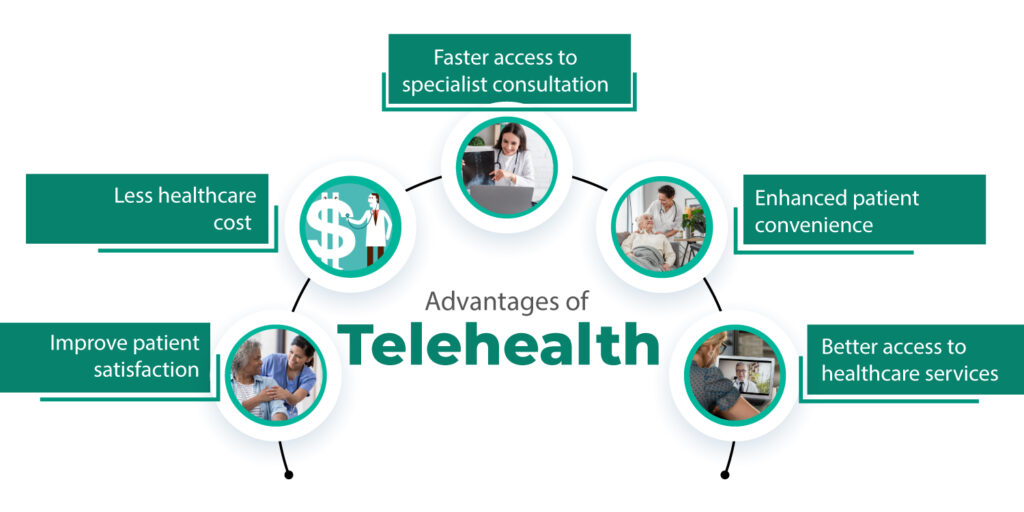
1. Better Access to Healthcare Services
Telehealth in the medical industry involves meeting healthcare needs remotely; thus, it eliminates geographical barriers. Ultimately, it ensures that patients living in remote or rural areas get excellent quality healthcare services.
2. Enhanced Patient Convenience
Through the telehealth software, patients can schedule their appointments and confirm the booking from the comfort of their homes. This provides unmatched convenience to patients as well as doctors. Also, it reduces the risk of spreading diseases.
3. Faster Access to Specialist Consultation
Certain medical emergencies require instant medical attention; therefore, this software is vital. Using these, you can get faster access to specialist consultations, as all you need to do is book a slot and get treatment remotely.
4. Less Healthcare Cost
Telehealth is less expensive than in-house consultation as it involves fewer administrative costs and eliminates infrastructure expenses. Additionally, patients save on parking, travel, and in-person visit expenses. Thus making it a pocket-friendly option!
5. Improve Patient Satisfaction
Since telehealth keeps a patient-centric approach, it enhances patient satisfaction as they get high-quality medical treatment and continuous follow-ups at home.
Impact of Telehealth on the Healthcare Industry
1. Increased Patient Engagement
With the introduction of telehealth in the healthcare industry, it is helping doctors and patients maintain their checkup appointments and healthcare schedules. Additionally, meeting your doctor and getting a thorough health checkup is now easier.
2. Remotely Monitoring Patients
Through telehealth, patient monitoring can be used remotely using technologies like computers, web cameras, the internet, and a mic. Additionally, patients can use home monitoring systems to check all vitals.
Read Also: How Does Remote Patient Monitoring Work
3. Addressing the Doctor Shortage
A shortage of doctors is a primary concern of the healthcare industry. Through telehealth, this issue has been addressed largely as physicians save a lot of time, which they can use for further appointments.
4. Less Expensive
As compared to traditional ways of getting medical services and treatments, telehealth is a less expensive solution as it saves your travel time and cost. Additionally, you no longer have to wait for hours in the waiting room for your appointment, as all appointments are made online, making medical services highly accessible.
Need Dedicated Developers for Your Telehealth or Telemedicine Platform?
Hire experienced healthcare developers to build secure, scalable, and virtual care solutions tailored to your business requirements.
Schedule a Meeting NowWhat is Telemedicine?
Telemedicine services can be defined as using telecommunications technologies to support the delivery of all kinds of medical, diagnostic and treatment-related services, usually by doctors. Besides this, through this software, patients can interact with healthcare professionals through videoconferencing, phone calls, or secure messaging to discuss symptoms, receive diagnoses, and seek treatment recommendations.
Additionally, it allows healthcare providers to remotely assess and diagnose medical conditions by reviewing patient history, symptoms, and, in some cases, medical images or test results. It extends to remote patient monitoring, where wearable devices and sensors track vital signs, chronic conditions, or post-surgery recovery. Healthcare providers can remotely access and analyze this data.
Example of Telemedicine
1. Annual wellness visits or physicals
2. Medication prescriptions and refills
3. Eye exams
4. Nutrition counselling
5. Mental health counselling
Advantages of Telemedicine
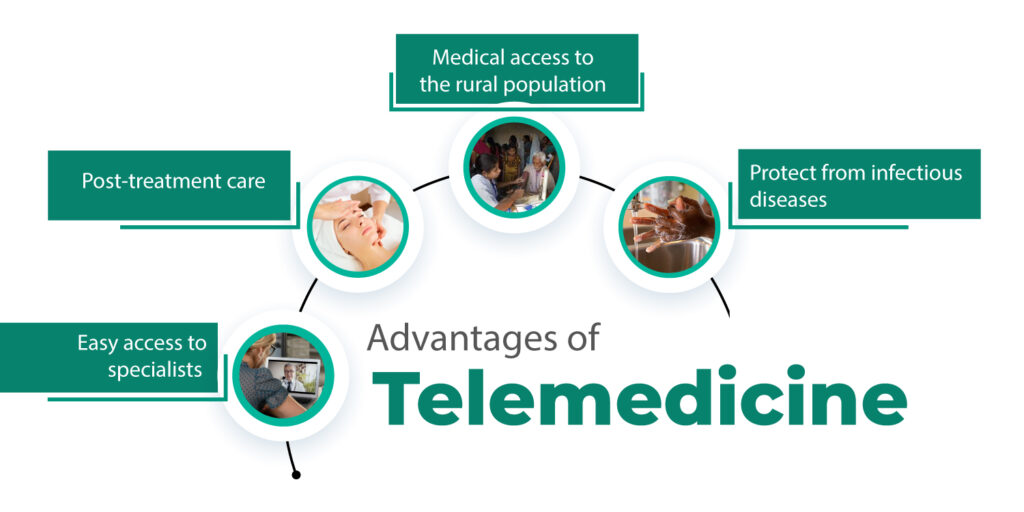
1. Medical Access to the Rural Population
Having access to excellent medical facilities is a great advantage of living in the countryside. However, patients from rural areas fail to enjoy high-quality medical services. But through telemedicine, it is possible as services are offered remotely, which also saves time and ensures you meet your medical needs faster.
2. Post-treatment Care
The right medical treatment and regular follow-ups are important after the surgery and for other health conditions. But through the telemedicine app developers, you can access post-treatment care in your home without compromising the quality of the healthcare service.
3. Protect from Infectious Diseases
Since telemedicine promotes offering quality medical services from the comfort of your home, it reduces the chances of contracting infections. Additionally, there are several diseases and the flu that spread by coming in direct contact with the infected person. Through this, consultations are conducted remotely, shielding you from different viruses. This safeguards doctors as well.
4. Easy Access to Specialists
Not every individual has a strong connection with doctors where they can give a call and discuss health problems. Thus, telemedicine software solutions are important. On the telemedicine software, you can directly connect with your preferred specialist and find medical solutions.
Read Also: What Are The Benefits of Telemedicine for Patients and Doctors
Impact of Telemedicine on the Healthcare Industry
Improved Access: Telemedicine breaks down geographical barriers, ensuring that individuals in remote or underserved areas can access healthcare services without extensive travel.
Convenience: Patients can receive medical care from the comfort of their homes, reducing the need for time-consuming and costly trips to healthcare facilities.
Reduced Wait Times: Telemedicine often offers quicker access to healthcare providers, reducing waiting times for appointments.
Cost Savings: Patients can save on travel expenses, childcare costs, and time off work associated with in-person visits. Healthcare facilities can also reduce overhead costs.
Enhanced Care Coordination: Telemedicine enables easier collaboration among healthcare providers, leading to better-coordinated care for patients with complex medical conditions.
Pandemic Response: Telemedicine played a crucial role during the COVID-19 pandemic, allowing healthcare delivery to continue while minimizing the risk of virus transmission.
Limitations of Telemedicine: Telemedicine has some limitations, especially when urgent medical intervention is required. It’s useful for managing symptoms, follow-ups and routine health check-ups, but it can’t replace in-person care during emergencies like fractures, strokes or cardiac arrest. In such cases, telemedicine can’t provide care as compared to physical assistance.
List the Difference Between Telehealth vs Telemedicine
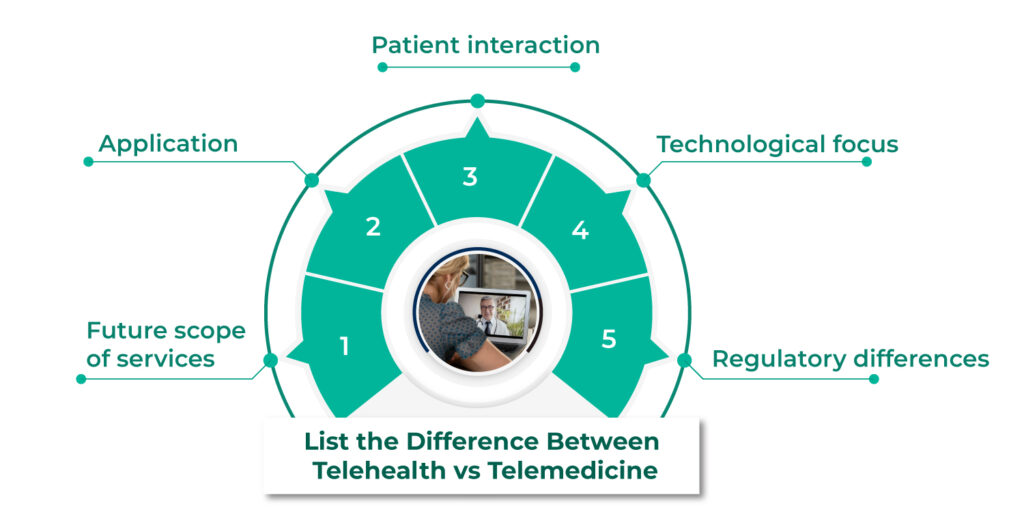
1. Future Scope of Services
Telemedicine: It involves dealing with clinical services offered by healthcare experts to patients remotely. Thus, some major services include diagnosis, tracking symptoms, and formulating patient treatment plans using telecommunication technology.
Telehealth: As compared to telemedicine, telehealth platform is a broader term featuring various medical-related services that go beyond providing clinical care. It also includes non-clinical services like provider training, administrative services, and medical education, but these are not a part of telemedicine.
2. Application
Telemedicine: It is mostly used for remote consultations between healthcare experts and patients. Additionally, it promotes detailed patient diagnosis and treatment without in-person visits.
Telehealth: Telehealth is a broad term that includes telemedicine as it covers services like administrative meetings, mobile healthcare apps, live video conferencing and remote patient monitoring. Also, it includes health-related education where doctors and patients can attend lectures.
3. Patient Interaction
Telemedicine: Telemedicine focuses on medical diagnosis and treatment, with a particular emphasis on the clinical aspect of healthcare delivery. Doctors improve patient interaction by using these applications, which also enhance communication and reduce stress. Additionally, you can follow tips for better patient interaction.
Telehealth: It places a strong emphasis on patient engagement and interaction, focusing on the patient’s entire healthcare journey. Therefore, it improves patient engagement and interaction by providing comprehensive care to patients.
4. Technological focus
Telemedicine: Telemedicine includes using technology to meet healthcare needs and fulfil clinical purposes. Majorly, it covers virtual doctor visits and remote monitoring devices. It also includes sharing medical records for diagnosis and treatment.
Telehealth: It supports different technologies that provide round-the-clock support to healthcare delivery. These include mobile health apps, wearable devices, and communication tools for administrative and health education purposes.
5. Regulatory Differences
Telemedicine: Telemedicine deals with particular guidelines and regulations tailored to clinical practice. These include licensure requirements for doctors and specialists practising across different state borders.
Telehealth: Telehealth regulations include different services in regard to administrative functions and health education. Telehealth follows different regulatory rules and considerations compared to telemedicine.
All telemedicine is telehealth, but not all telehealth is telemedicine. Telemedicine vs telehealth is part of a broader initiative to increase access to care, make health management simpler for patients, and enhance the effectiveness of the healthcare delivery network.
| Telehealth | Telemedicine |
| Telehealth includes a wide range of remote healthcare services, including medical and non-medical | Telemedicine is a small part of telehealth and mainly focuses on medical care |
| It involves more than just doctor-patient communication | This is limited to communication between doctors and patients |
| Services can be provided by healthcare workers, pharmacists, educators, and other frontline staff | Mostly involving doctors in direct patient assistance |
| Telehealth includes things like lab test results, health education, training, and technology support for healthcare | Telemedicine is mainly about online video consultations with doctors |
| It uses vide consultation, email, text and other streaming media for communication | It uses video-conferencing, email, text, online patient portals |
| It helps patients manage their chronic conditions through tracking and communication | It extends the reach of doctors to patients remotely |
Read Also: HIPAA Compliant Communication in Healthcare: Everything You Need to Know
Telehealth vs Telemedicine: Which One Should You Choose?
The right choice depends on your healthcare goals, patient needs, and the type of care you want to deliver.
Choose Telehealth if:
- You need general health education or wellness support
- You want to monitor a chronic condition through remote tracking apps or wearables
- You are a healthcare provider looking for administrative or training solutions
- You need a multi-disciplinary care team (doctors, nurses, pharmacists, social workers) involved in your care
Choose Telemedicine if:
- You need a clinical diagnosis, prescription, or specialist consultation
- You are managing a specific medical condition and need direct doctor interaction
- You require a follow-up after surgery or a procedure
- You want a mental health therapy or psychiatric evaluation conducted online
Looking for a Custom or White Label Telehealth or Telemedicine Platform?
We build secure, scalable and virtual care solutions for hospitals, clinics and healthcare startups tailored to your unique needs.
Contact UsConclusion
Both telemedicine and telehealth are rapidly evolving technologies that have gained immense significance in recent years. Known for their ability to provide remote healthcare services, they differ in scope and application. VCDoctor is a HIPAA-compliant telemedicine platform that delivers advanced telemedicine and mHealth solutions. Our experts seamlessly integrate telemedicine technologies, enabling healthcare providers to diagnose patients, track symptoms, and deliver effective treatment remotely.
If you have any questions related to this article, feel free to write to us in the comment section. We are committed to delivering efficient solutions with complete customer satisfaction. Get in touch with our experts today and discuss your requirements!
FAQs
1. Is telemedicine limited to video consultations with doctors?
Telemedicine includes a wider range of clinical services beyond video consultations, such as remote diagnosis, prescription management, and the interpretation of diagnostic tests like X-rays and MRIs.
2. Are telehealth vs. telemedicine covered by insurance?
Coverage varies by insurance plan and region. Many insurance plans provide coverage for both telehealth vs telemedicine services, but it’s essential to check with your insurer to confirm coverage.
3. What is the difference between telehealth vs telemedicine?
Telemedicine refers specifically to clinical services provided remotely, while telehealth is a broader term encompassing a wide range of healthcare services and non-clinical activities delivered remotely
4. Can telehealth or telemedicine be used for urgent medical issues?
Telehealth vs telemedicine can be used for non-emergency medical issues, such as minor illnesses or chronic disease management. In emergencies requiring immediate attention, it’s best to seek in-person care.
5. How can I get started offering Telehealth or Telemedicine services?
You can get started easily with ready-to-use telemedicine solutions like VCDoctor. VCDoctor is also customizable and compliant with regulatory requirements like HIPAA. For telemedicine success, assess patient needs and preferences and establish appropriate workflows.
6. Can providers offer customized Telehealth or Telemedicine solutions to meet the unique needs of their practice and patients?
Yes, providers can work with vendors or develop their custom solutions to meet the unique needs of their practice and patients. Custom solutions can include specialized software, workflows, and integrations with other healthcare technologies. Providers should carefully assess their needs and budget when considering custom solutions.



Fantastic post. Well-organized content and written in the elementary language. Thanks for sharing.
I would like to say thanks for a remarkable post and an all-round exciting blog (I also love the theme/design); I don’t have time to read it all
at the moment, but I have book-marked it and also added your RSS feeds, so when I have time, I will be back
to read a lot more; please keep up the excellent work.